What is kerbing?
Kerbing is the row of concrete, stone or block units along the edge of a road, driveway, path or car park. Edging is the smaller version used around paving and lawns. Both do the same thing: stop the surface from spreading, give a clean line and guide where water runs.
Kerbs are bedded on concrete and backed up with more concrete behind (called haunching), so they can take knocks from wheels and the push from the paving beside them.
When is kerbing needed?
- Edging a new block paving driveway or patio
- Replacing kerbs that are loose, cracked or sinking
- Separating a drive or car park from lawn or planting
- Forming roads, footpaths and parking bays on estates and commercial sites
What's included
- Setting out the line and levels
- Digging out for the kerb bed
- Laying kerbs or edging on a concrete bed
- Haunching to hold them firm
- Cutting for curves, corners and gateways
A new dropped kerb on a public road needs your local highway authority's permission before any work. Check with your local council first.
How we work
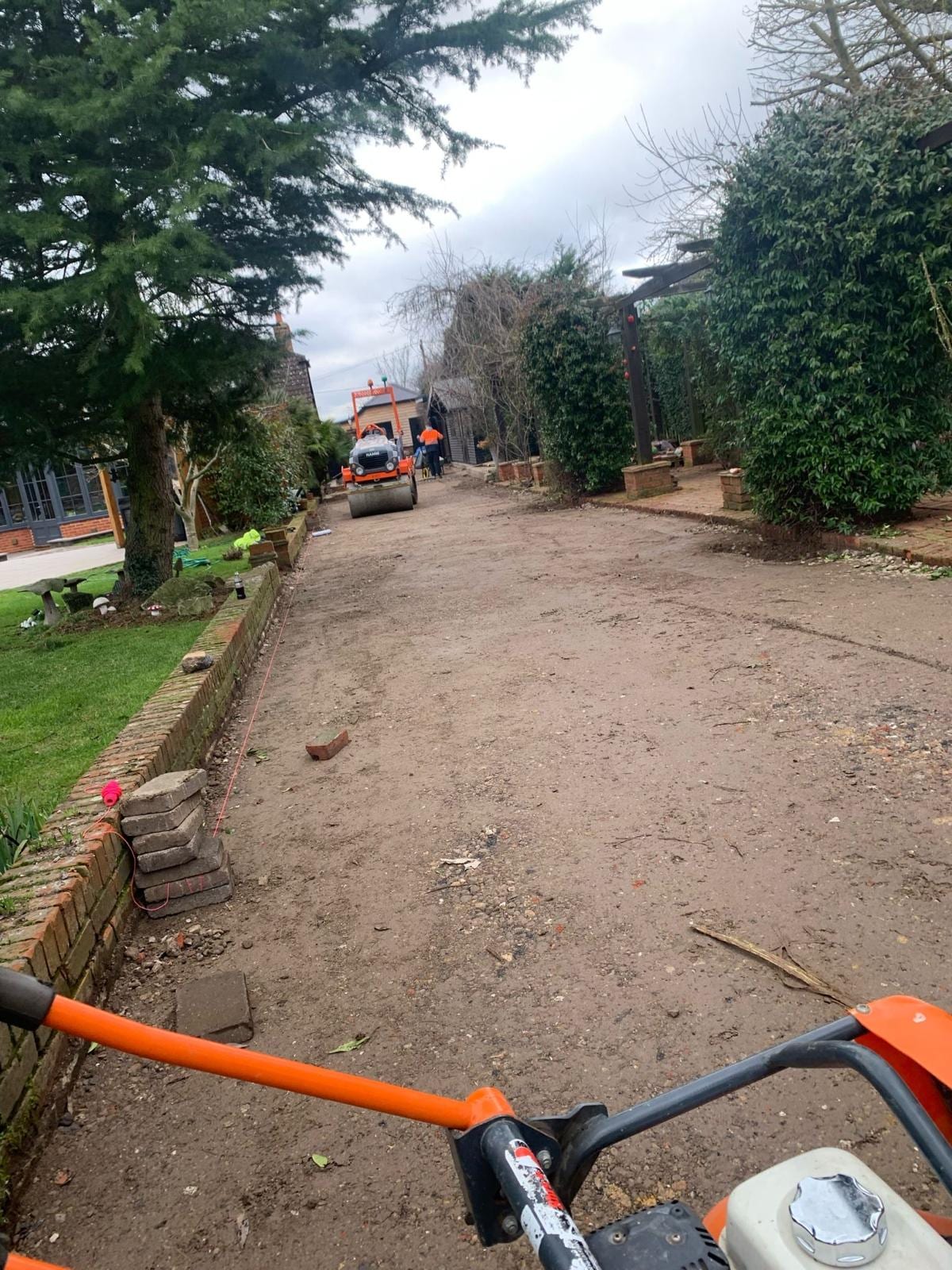
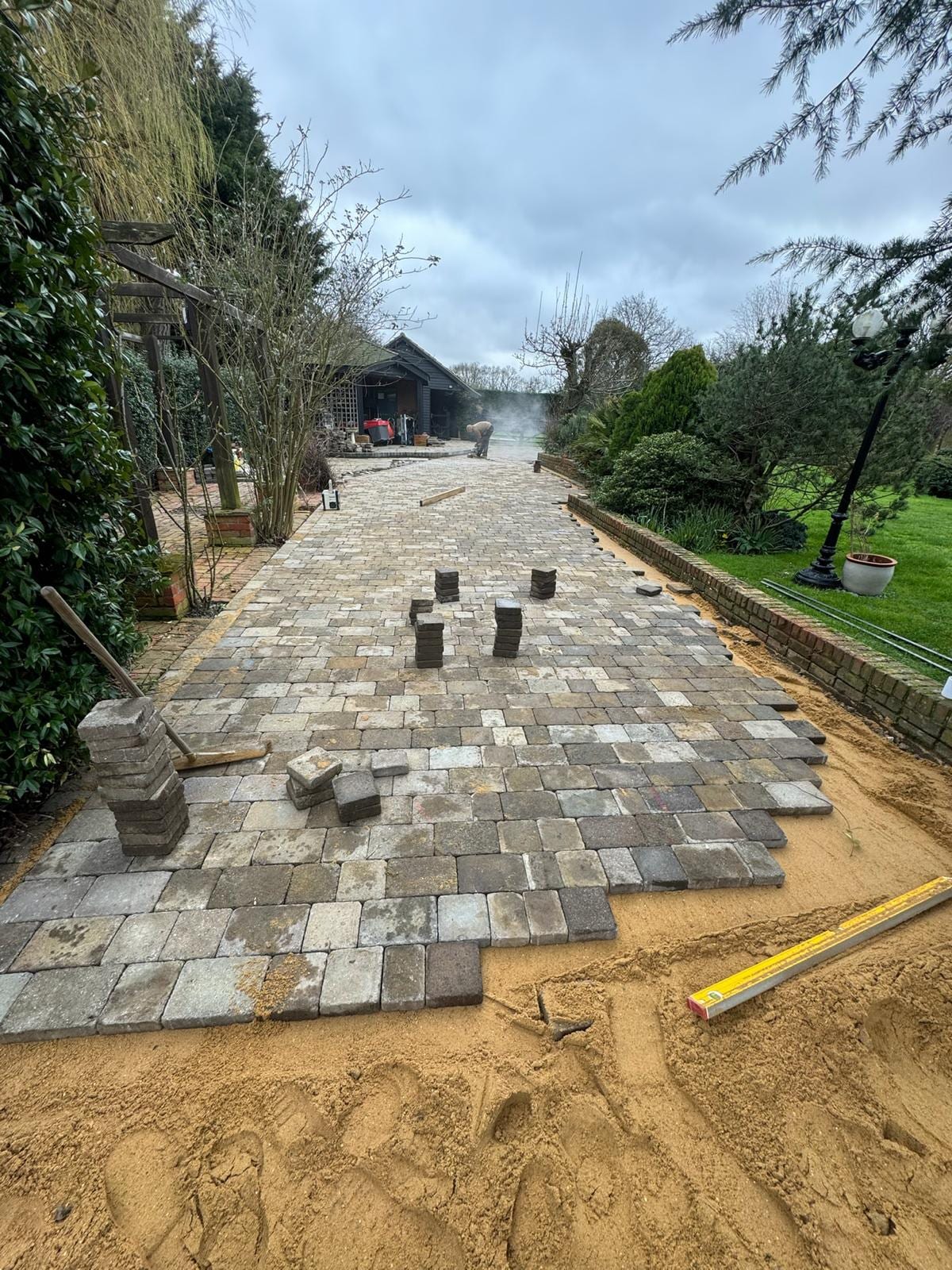
Kerbs usually go in after the sub-base and before the surface. We set out a string line, lay each unit on its bed, check the line and level, and haunch it before moving on. On curves we cut and fit units so the line flows rather than steps.
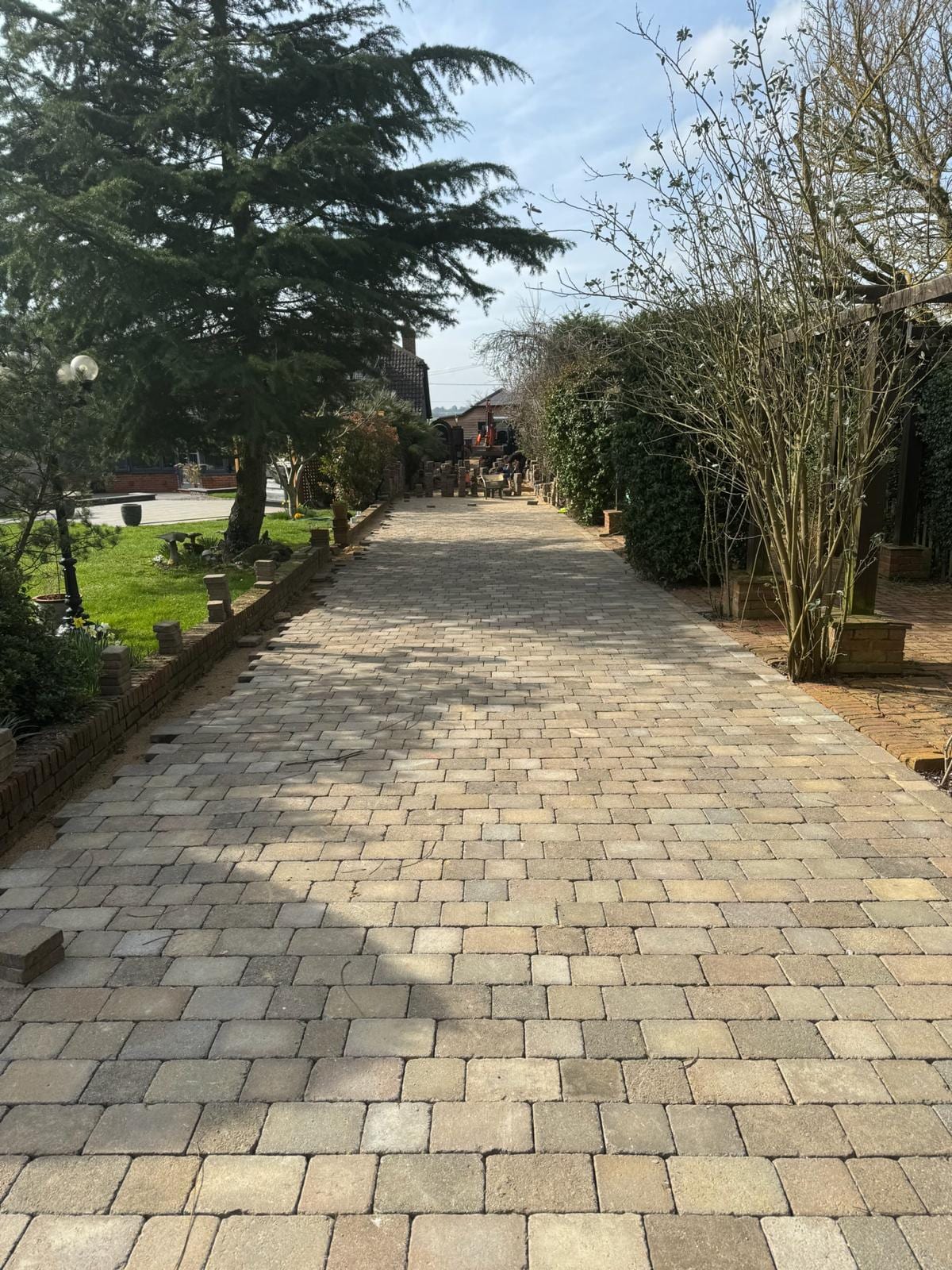
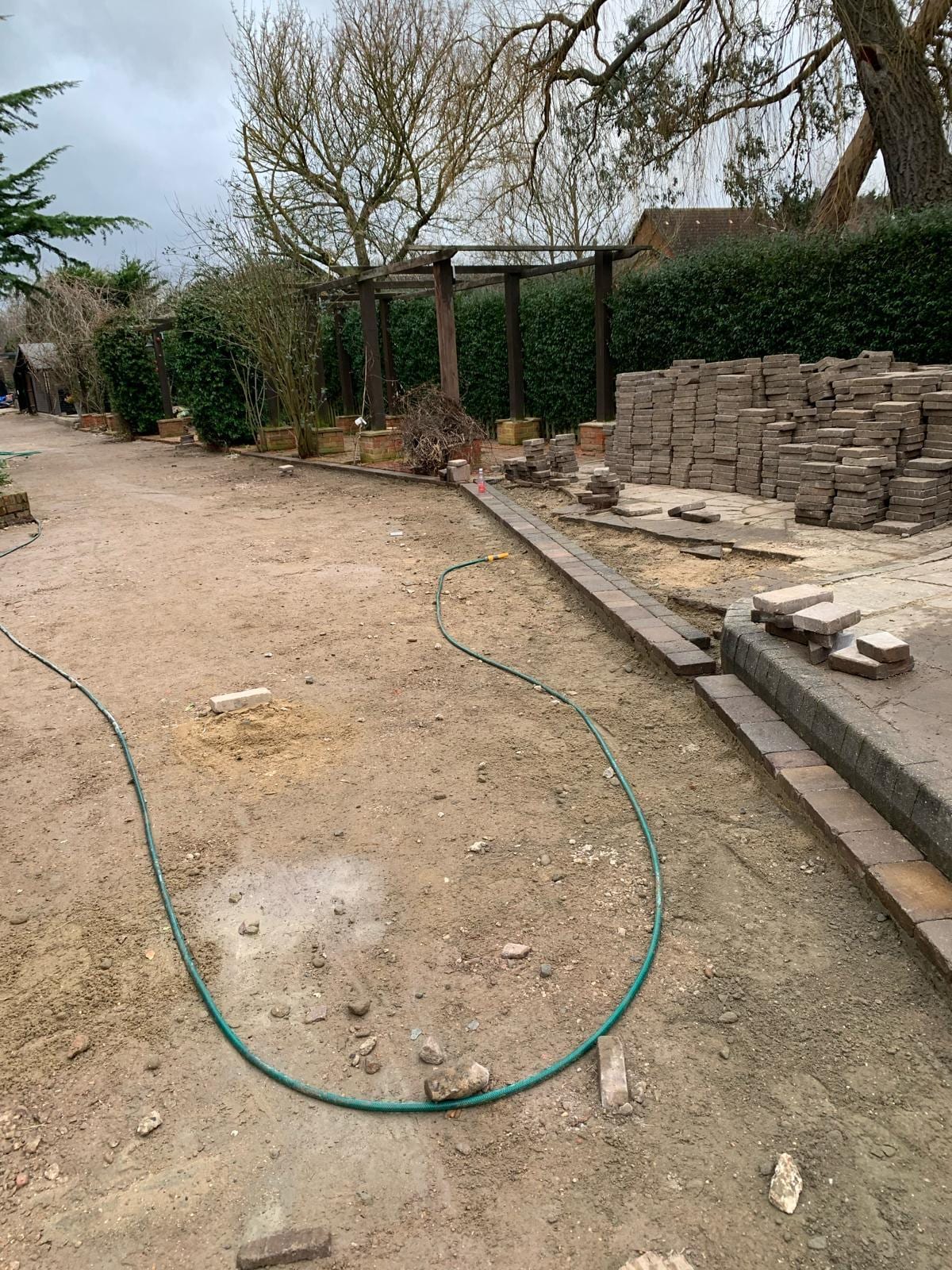
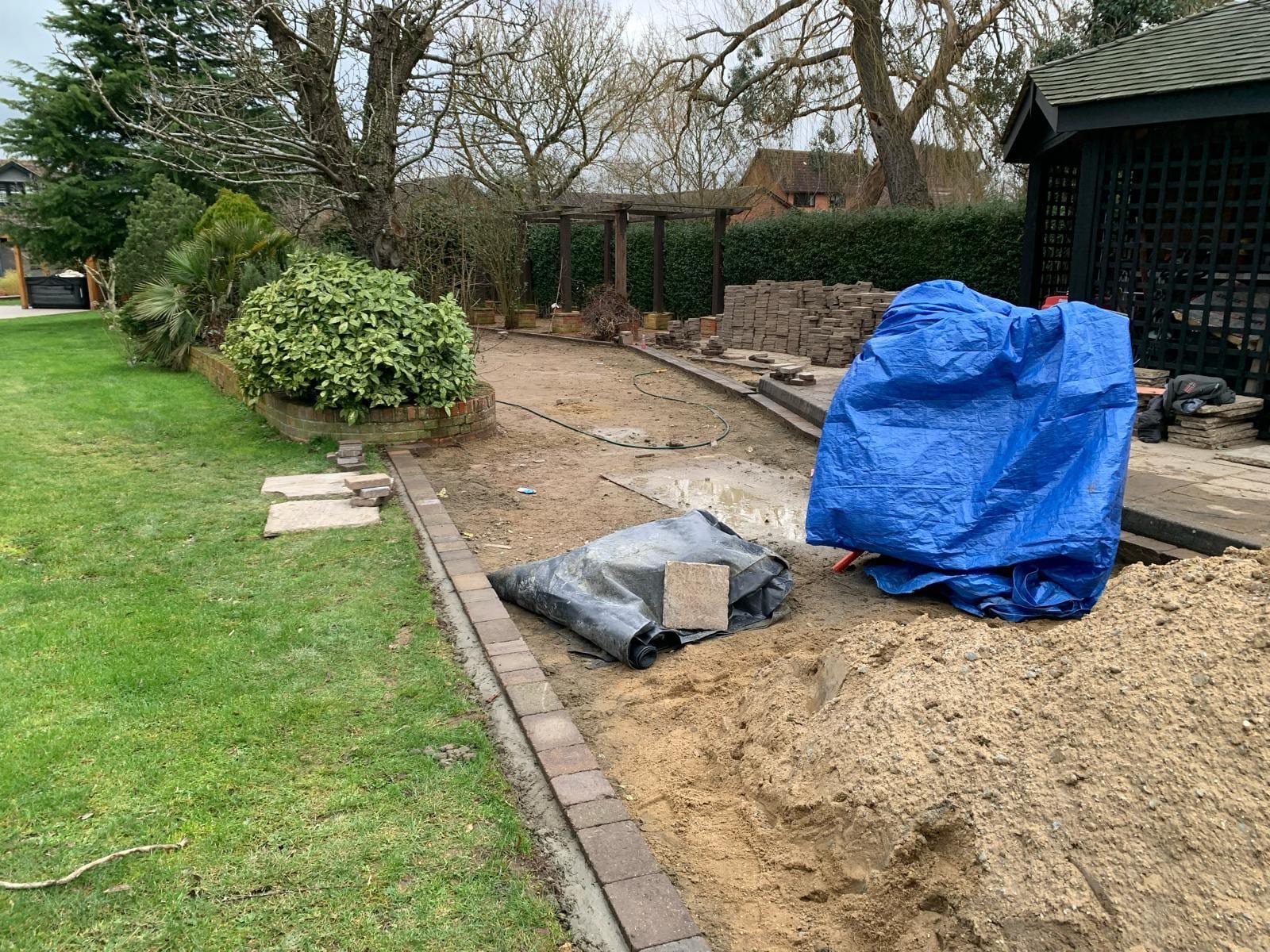
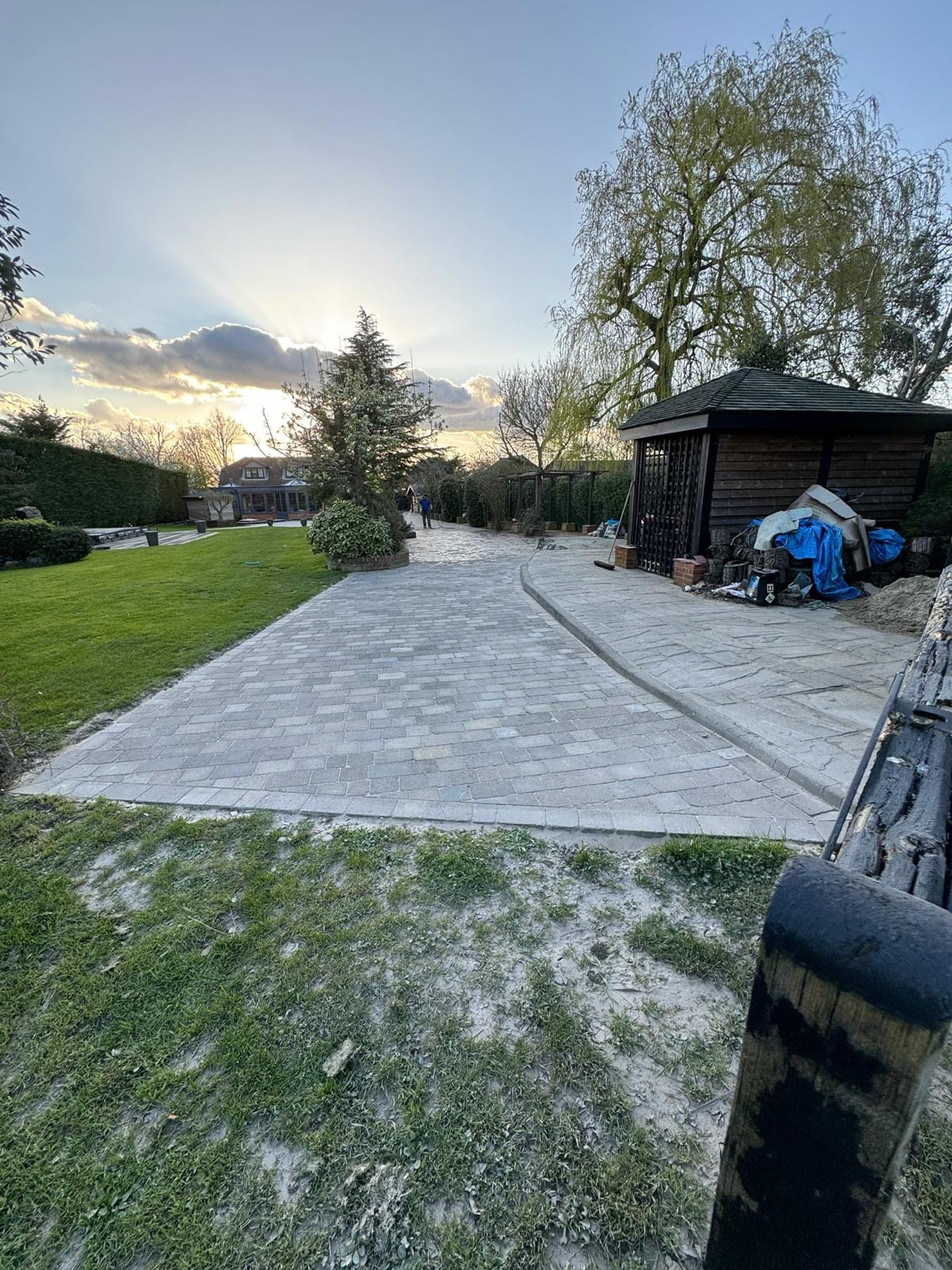
Our block paving driveway project shows the edging stage: edging laid along the lawn and fence, with pallets of new blocks ready to go.
Kerbing for homes and for commercial clients
Homeowners: kerbing is part of most driveway and patio jobs we do, and we can also replace failed edging on an existing drive.
Commercial clients: housing estates, industrial sites, hospitals, airports and council land all need kerb lines for roads, paths and parking. We work to your drawings and levels and fit in around a live site. See our commercial work.
Photos from our jobs
Frequently asked questions
Why is my driveway edging coming loose?
Usually because it wasn't haunched with enough concrete, or the ground under it was soft. Once edging moves, blocks start to spread and open up. The fix is to lift and reset it properly.
What's the difference between kerbs and edging?
Kerbs are larger units used on roads, car parks and driveways that take vehicle weight. Edging is smaller and used around paths, patios and lawns. Both need a solid bed.
Can kerbs be laid on a curve?
Yes. We cut standard units or use curved ones so the line follows the shape of the drive, path or road.
Can you set kerbs to match an existing road or footpath?
Yes. We take levels from the existing edge and set the new kerbs to line up with it, so the join is smooth and water still runs to the same gullies.
Do kerbs affect drainage?
They do. A kerb line guides surface water along the edge to a gully or drain. If kerbs are set too high or too low, water can pool or spill onto lawns and paths instead.