What are drainage and soakaways?
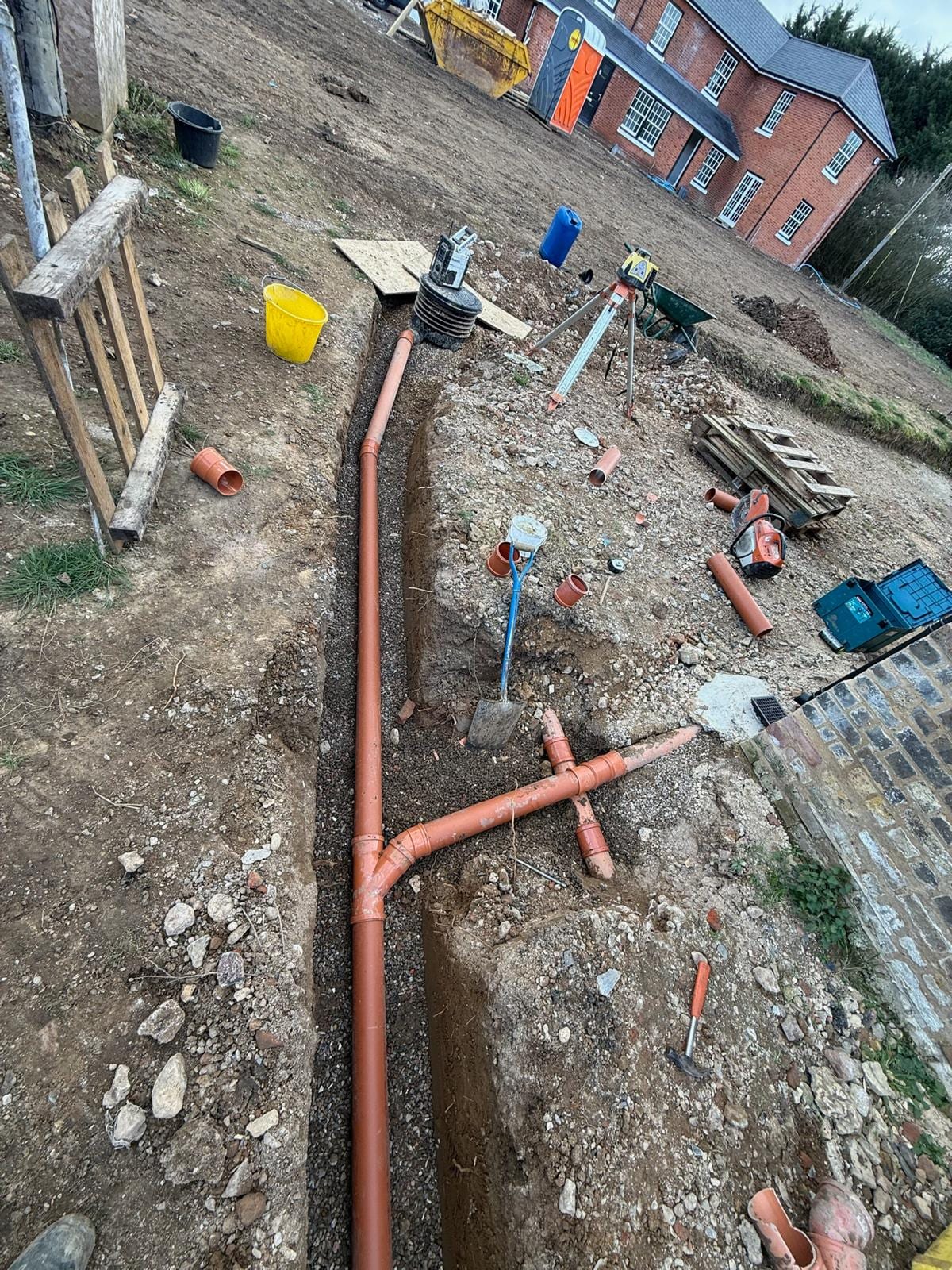
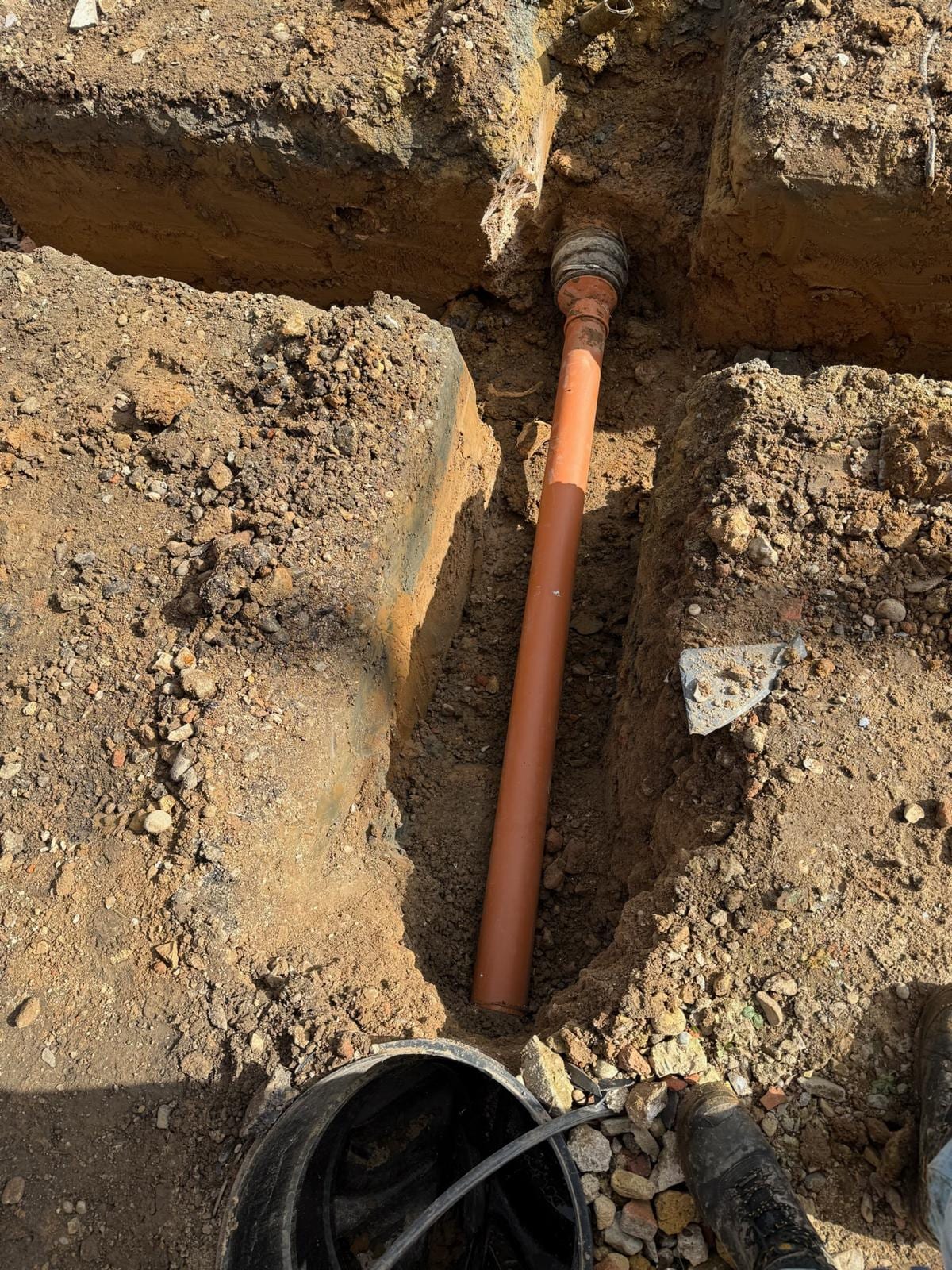
Below-ground drainage is the network of pipes, junctions and chambers that carries rainwater and wastewater away from buildings and hard surfaces. Pipes are laid in trenches on a bed of gravel, to a steady fall, so water flows on its own.
A soakaway is a pit or set of crates in the ground that takes surface water, such as rain from a roof or driveway, and lets it soak slowly into the soil instead of going into a sewer.
When do you need new drainage?
- Building an extension, new home or development
- A new driveway or patio needs somewhere for rainwater to go
- Water pools in the garden or against walls
- Old drains are cracked, blocked or have collapsed
General guidance for England: a soakaway should be sized from a percolation test, which shows how fast water drains into your soil. Building Regulations guidance (Approved Document H) says soakaways should normally be at least 5 m from a building. Check with your local council or building control.
What's included
- Excavating drainage trenches
- Gravel bedding and surround to the pipes
- Laying pipes, junctions and bends to falls
- Inspection chambers and connections
- Soakaway pits or crate systems
- Backfilling and reinstating the ground
How we work
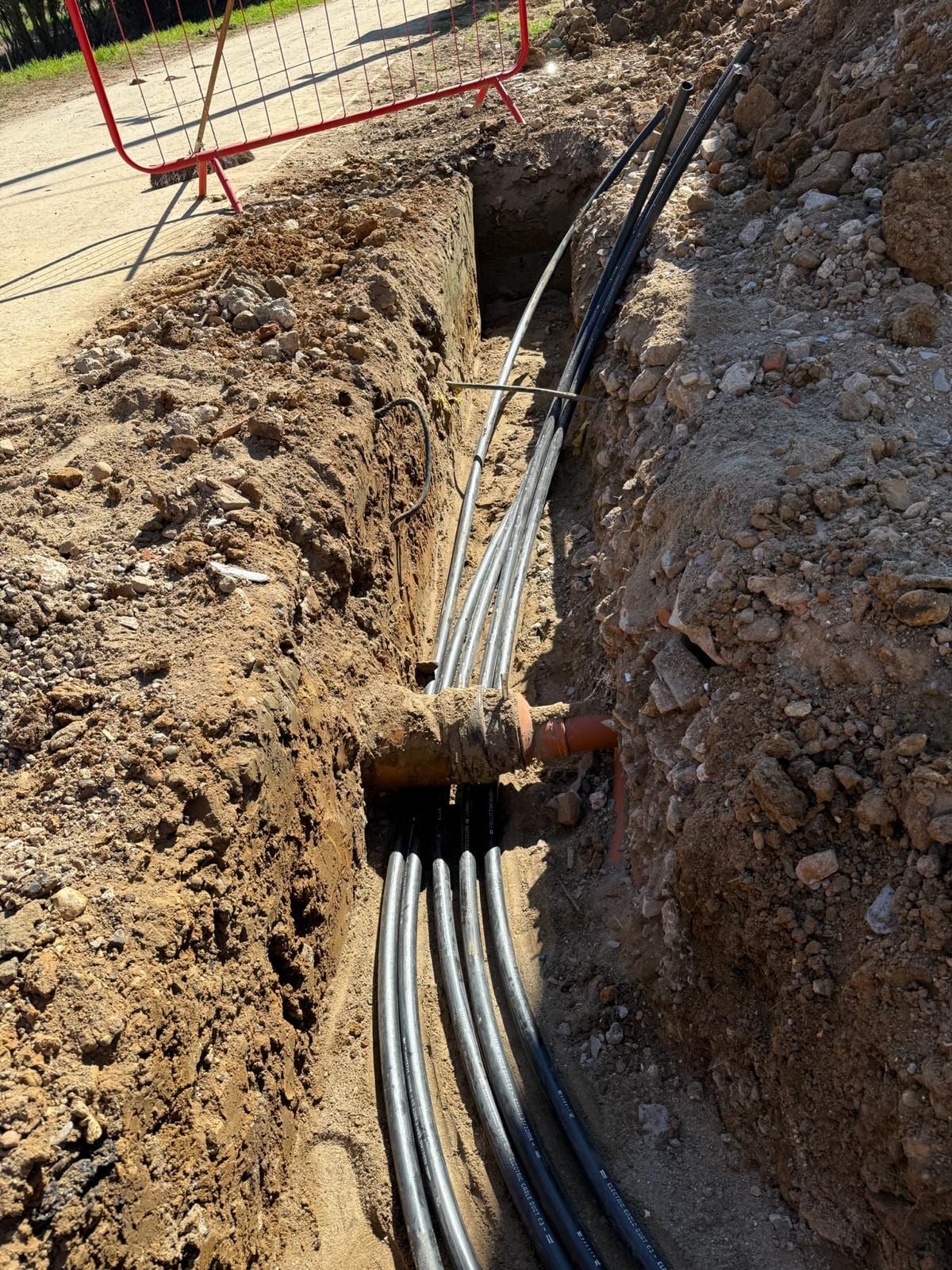
We work from the drainage layout where there is one, or look at falls and outfalls on site. Trenches are dug to line and depth, bedded in gravel, and pipes laid and checked for fall before backfilling. Chambers go in at junctions and changes of direction so the system can be inspected later.
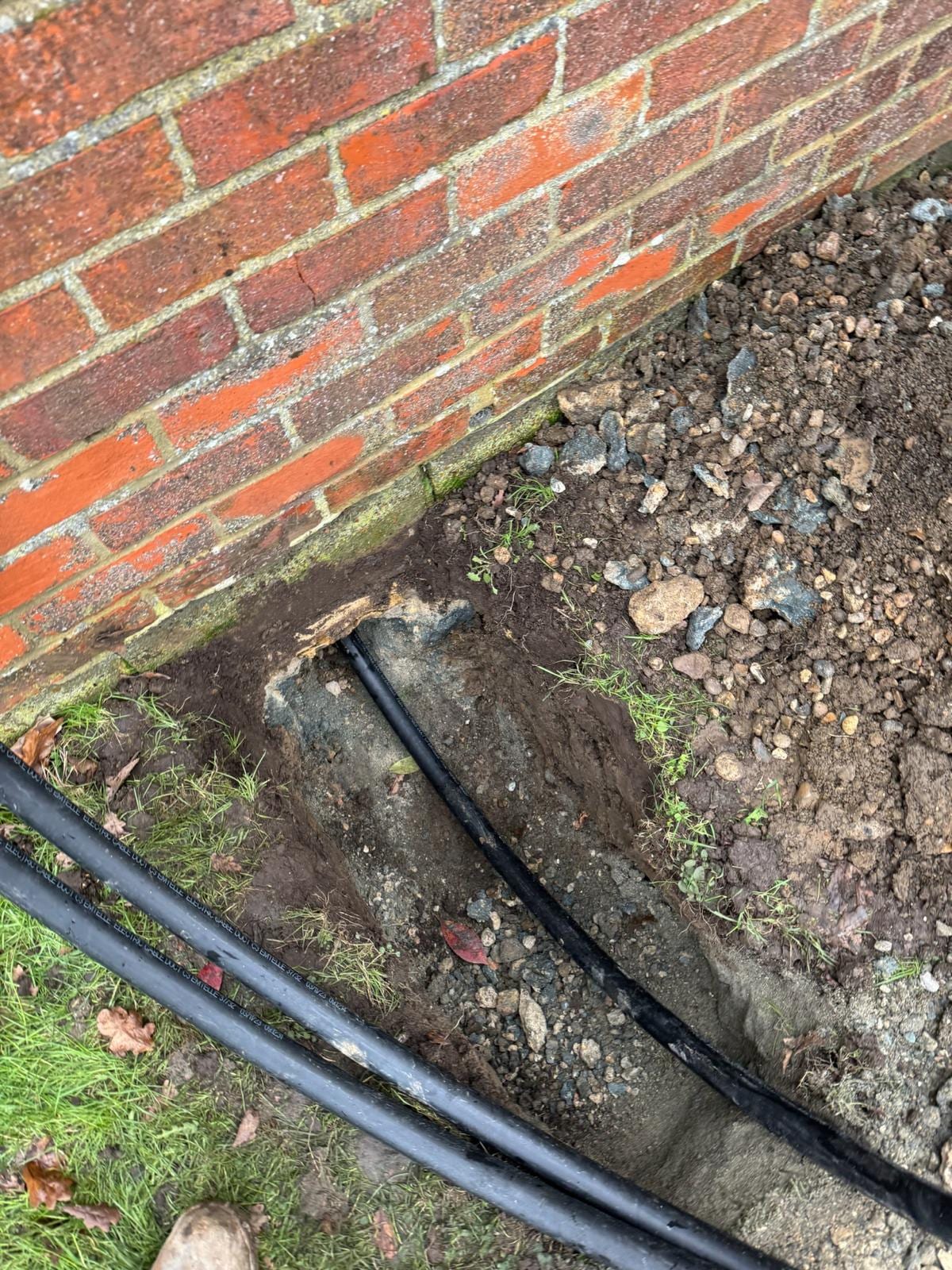
Our drainage and ducting project on a housing development shows drainage runs with branch junctions, gravel-bedded trenches and multi-duct service runs laid with marker tape.
For homeowners and commercial clients
Homeowners: we put in drainage and soakaways for extensions, driveways and problem gardens. If you're having a new driveway, it's the right time to sort out where the water goes.
Commercial clients: for housing estates, industrial sites, hospitals and council land, we carry out drainage runs and trenching to your drawings. See our commercial page.
Photos from our jobs
Frequently asked questions
What is a percolation test?
A hole is dug, filled with water, and timed to see how fast it drains. The result is used to work out how big the soakaway needs to be, or whether a soakaway will work at all.
How close to my house can a soakaway go?
Building Regulations guidance says normally at least 5 m from a building, so water doesn't soften the ground under the foundations.
Can my driveway drain into a soakaway?
Often, yes, and it can help with planning for front gardens, because rainwater stays on your property instead of running onto the road.
Do I need permission to connect to the public sewer?
Yes, a new connection to a public sewer normally needs the water company's approval. Check with your water company before work starts.