What is a patio?
A patio is a paved outdoor area, usually next to the house, for seating, dining or simply getting around the garden without walking on mud. Paving covers the same kind of work on a wider scale: garden paths, side passages, bin stores and the paved areas around a building.
Each one is built in layers. Under the slabs or blocks there's a bed of mortar or sand, and under that a compacted base. Get the layers and the slope right and the patio stays flat and dry for a long time.
When is it time for a new patio?
- Slabs rock, crack or have sunk in places.
- Puddles form, or water runs back towards the house.
- Weeds keep coming through wide or broken joints.
- You want more usable outdoor space, or a path where the lawn is worn through.
What's included
- Clearing the area and digging out
- A compacted sub-base sized for the use
- Setting levels with a gentle fall away from buildings
- Laying slabs or block paving, with neat cuts at edges and corners
- Pointing or jointing to finish
- Joining the new paving to existing patios, paths or driveways
How we work
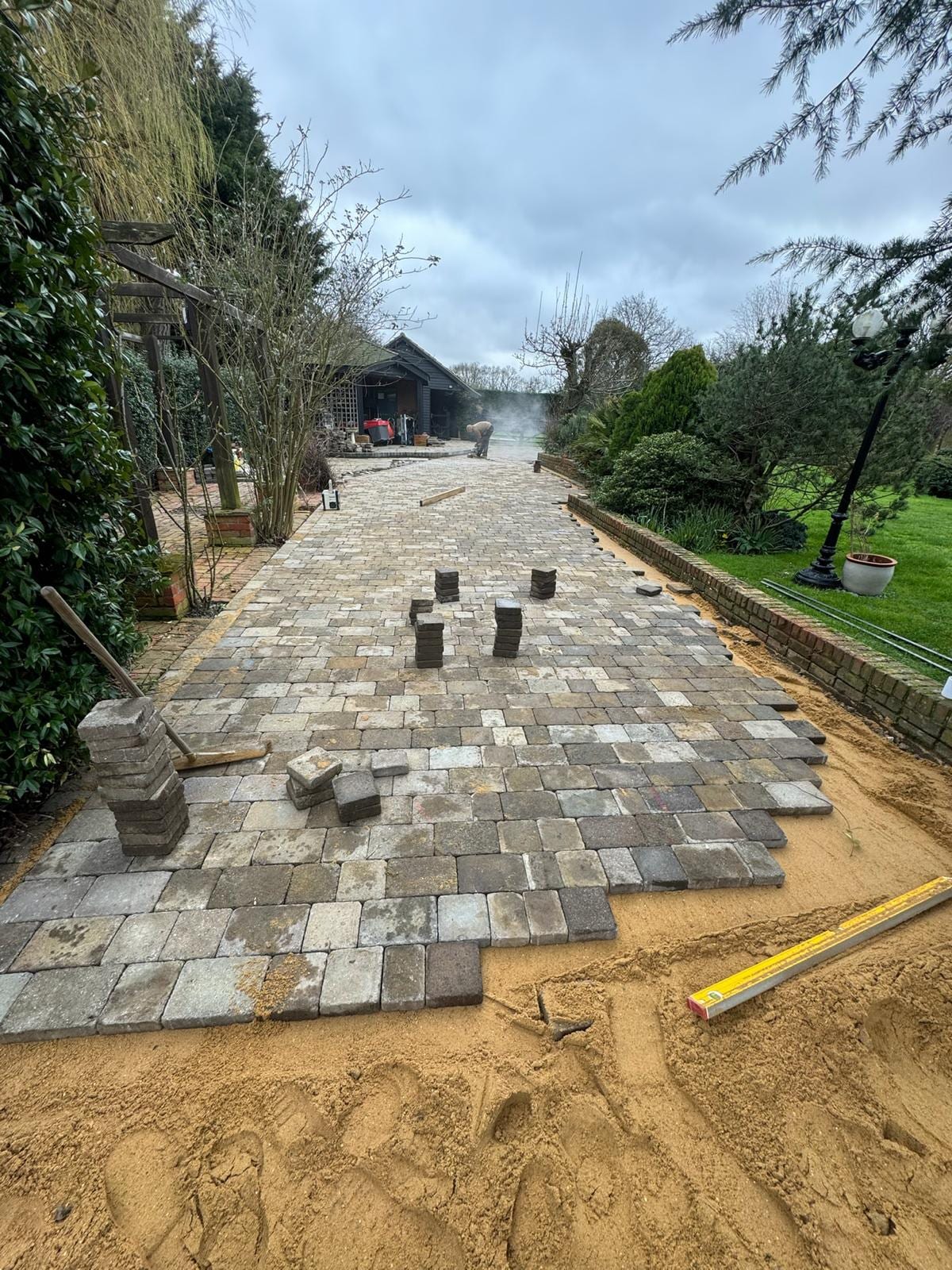
We look at the space, check levels against the house and any damp-proof course, and agree the shape and finish with you. On site we mark out, dig, build the base, then lay from a fixed line so courses stay straight. Where new paving meets old, we take care to match heights so there's no trip edge.
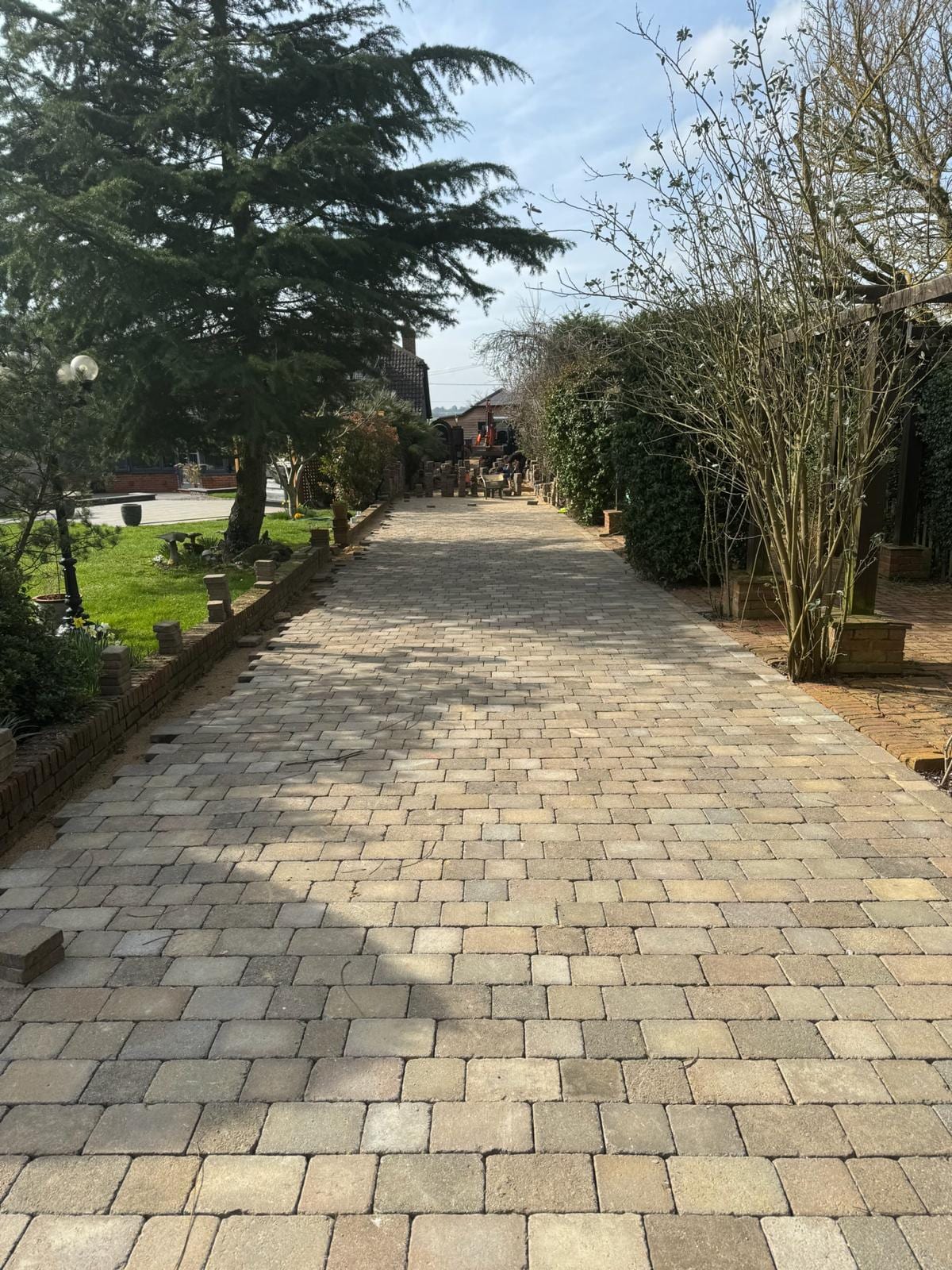
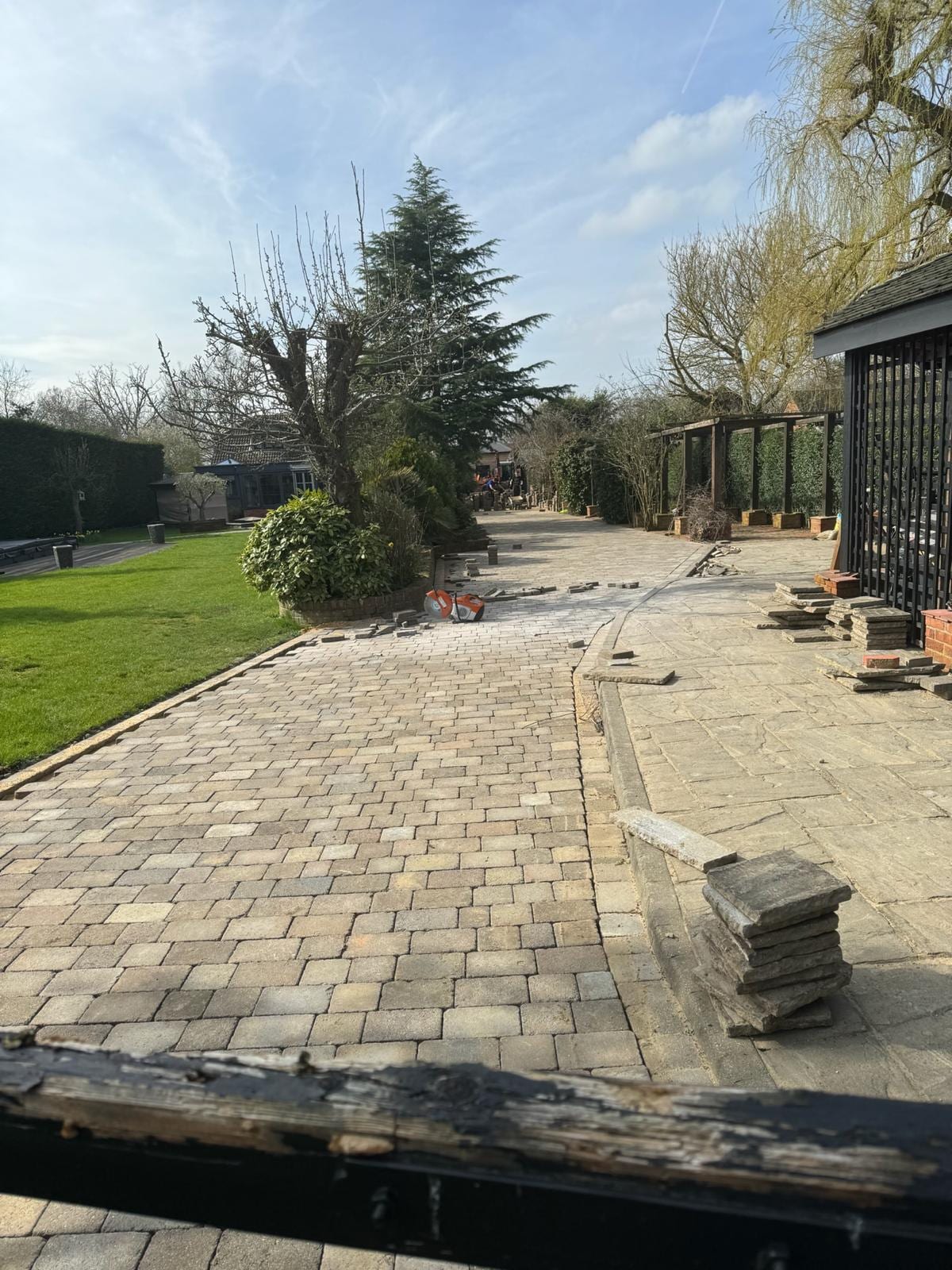
Our block paving driveway project shows new paving being joined neatly to an existing patio.
Patio levels should normally sit below the house's damp-proof course. If you're unsure where yours is, we'll check before we start.
For homes and for commercial sites
Homeowners: a patio is often part of a bigger garden plan. We can work alongside a new driveway, artificial grass or fencing so it all ties together.
Commercial clients: on business premises, estates and public spaces, paving needs to stand up to heavy foot traffic and stay safe in the wet. We plan the base and joints with that in mind and work around people using the site.
Photos from our jobs
Frequently asked questions
Do I need planning permission for a patio?
Usually not for a back-garden patio at ground level in England. Raised decks and terraces, listed buildings and conservation areas can be different, so check with your local council if any of those apply.
Can you lay new paving next to my existing patio?
Yes. We set the new levels to meet the old surface so the join is flush, and we can trim or relay edge slabs if needed.
Should my patio slope?
Yes, slightly. A small fall lets rainwater run off instead of pooling, and it should always run away from the house, towards a lawn, border or drain.
Can I have a patio and a driveway done at the same time?
Yes, and it often makes sense. The digging, base work and waste removal can be planned together, and the levels can be set so the two surfaces meet neatly.